“This book provided me with handy shortcuts and conversational pointers so I was never in danger of being exposed to great literature.”
There. Now you don’t have to read this one either.
“This book provided me with handy shortcuts and conversational pointers so I was never in danger of being exposed to great literature.”
There. Now you don’t have to read this one either.
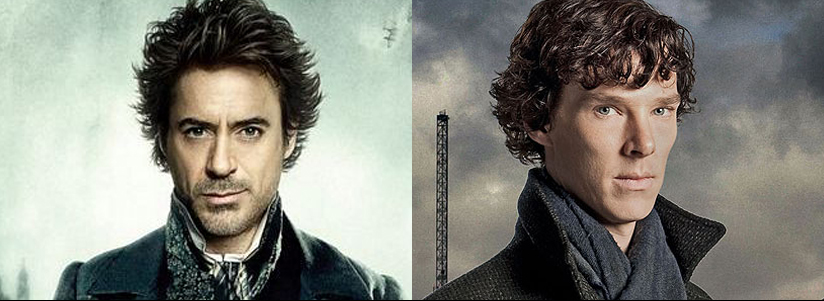
(Spoilers herein for the Guy Ritchie Sherlock Holmes films, the Steven Moffat/Mark Gatiss Sherlock TV series, some of the original Arthur Conan Doyle stories, Batman Begins and, believe it or not, TMNT.)
Last night I finished watching the second brilliant season of BBC’s Sherlock: Holmes, Watson, Moriarty, and a wonderful skewering of the meaning of “Reichenbach”. A twist ending to leave us guessing, but enough clues to allow for some reasonable theories. It was everything I wanted from the show, once you accept that 52 x 90 minute episodes per year is an unreasonable wish.
As the episode drew to a close and I began contemplating the sort of foetal position I’d need to adopt before season three airs (early 2013, at a guess), something occurred to me. Actually, it occurred to me ages ago when they started teasing the season with the tantalising “The Woman. The Hound. The Fall.”, but because the season hadn’t actually aired yet, I thought it would be bad form to talk about how it would inevitably end.
Long-time Holmes fans had a pretty good idea of where it was going. In the end of the story The Final Problem, our narrator Watson discovers that Holmes and Moriarty have plunged over the Reichenbach Falls together, presumably to their deaths. Arthur Conan Doyle wanted to move on from Holmes, but his fans wouldn’t allow it. Even the next Holmes story, The Hound of the Baskervilles, a prequel, didn’t sate them, so Doyle brought Holmes back properly in The Adventure of the Empty House, his death revealed to have been a fake.
So, what do we do with these stories now, over one hundred years later? It’s not like Shakespeare or Dickens or Greek tragedy: these stories are not spotlights shone on the human condition that remain relevant to us all these years later. No, they are plot-driven adventures, and plot-driven stories do not tend to hold up to repeat tellings, particularly when everybody’s more than familiar with them. At the same time, Holmes is one of the most fascinating characters ever created, so we cannot leave him alone.
Amazingly, Holmes is been tackled simultaneously, in a big-budget Hollywood franchise, and by a (relatively) smaller-budgeted TV show. The first Sherlock Holmes movie (the one with Robert Downey Jnr and Jude Law) came out within a few months of Sherlock season one, and both resisted the obvious temptation of putting Holmes’s arch-foe Moriarty at the centre of it all.
And yet, Moriarty was not absent. Both the film and the TV show attempted to have their cake and eat it too: different villains and challenges were brought to the fore, whilst the promise of Moriarty lingered in the background.
What’s interesting is how these two productions – one a TV series, the other a big budget movie; one modern, one period; one incredibly faithful to the stories, one selectively faithful to certain bits – are, structurally, identical.
Season One of Sherlock and Guy Ritchie’s 2009 Sherlock Holmes both tease us with mentions of Moriarty throughout. He is not he focus, but a distraction. A threat of something bigger. In both cases, Holmes is unfamiliar with him, and both the series and the movie end with the promise that Moriarty will be back.
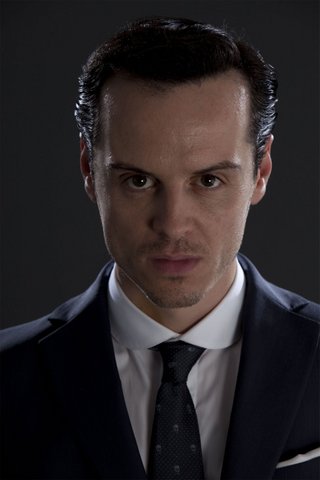 Sure enough, the villain returned to menace Holmes in Sherlock Holmes: A Game of Shadows, and then did so again a couple of weeks later in Sherlock Season Two. Both adaptations made use of Moriarty as if following the mix tape rules set out in Nick Hornby’s High Fidelity: the second track has to take it up it a notch. You have to leave yourself somewhere to go.
So, naturally, both sequels end with the fall. One off the Reichenbach, the other as a result of Reichenbach. The cliffhanger – or rather, the cliffplunger – is the same in both: Watson, as well as the wider world, believes Holmes to be dead, a fact that the audience discovers is not true. One is played for comedy, the other for tragedy, but they use an almost identical roadmap to get there.
These productions were hardly the first films to use this roadmap. It’s now the accepted formula for reboots of familiar properties, especially those that are coming very quick on the heels of their predecessors (non-filthy reading, please).
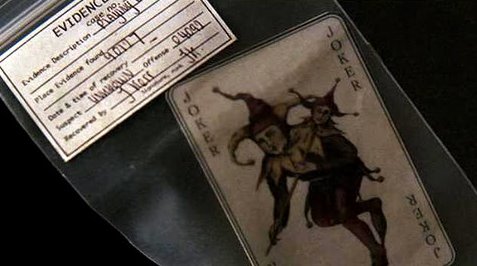
2005’s Batman Begins established the trend, aching as it was to replace memories of 1997’s Batman and Robin’s nipple suits and thoroughly-horrible versions of… well, everything, with something more serious. The villain in Batman Begins was the deliberately solemn, obscure and un-costumed Ra’s al Ghul. Whereas previous films had traded on memories of villains from the Adam West TV show, this film deliberately did the opposite. One of its selling points was that nothing was familiar, a feint that proved effective when the heart-stopping Joker card appeared at the end. Clearly, the next film would feature Batman’s most notorious foe. (And not, as a man I overheard at the premiere said to his friend with misplaced confidence, ‘And that one ties into the first film with Jack Nicholson!’.)
Two years later, TMNT attempted to reboot the Teenage Mutant Ninja Turtles for the 21st century, and though it didn’t quite succeed, the film itself was decent. Rather than telling another version of the origin story, this is a get-the-band-back-together story, filled with references to the defeated and deceased Shredder. Until, naturally, the final moments suggested that Shredder was coming back. A sequel never eventuated, but the intent was clearly there.
It’s hardly a huge revelation that reboots of popular characters wish to take a different approach to their predecessors. What’s incredible is how the structure they now take is practically identical from franchise to franchise. How do you bring back these touchstone characters without falling into the dangerous pit of postmodernism? There’s a way to be sincere whilst acknowledging that your audience knows the score.
As much fun as it is to play with superficial coincidences in the two Sherlocks – “Make sure whoever plays Watson starred in Anthony Minghella’s Breaking and Entering!” “Make sure Mycroft is played by a gay Doctor Who fan who got his break in TV comedy!” – the fact that they are using such a similar structure despite their wildly different approaches is a big flag in the ground. The proximity of the two franchises draws attention to this approach in a way the proximity of Batman Begins and TMNT did not, and I suspect we’re going to be referring to these adaptations quite frequently in the future, once we start looking back at the early 21st century with nostalgic eyes and attempt to identify how we told once told these stories.
Will these similarities continue into the third film/third season? Aside from the essential resurrection of Holmes, the way forward is less clear and paths will soon diverge. But if it means we get a third season of Sherlock sooner rather than later, I’m all for encouraging the rivalry.
For ages I’d been wondering what happened to Andrew McCarthy, and why James Spader had put on so much weight.
So, that was 2011, huh?
As if turning thirty, getting engaged, and moving into a new place wasn’t enough, I also – on the off-chance anyone reading this site doesn’t know – got a TV show up and running on ABC2. It was called The Bazura Project and it was about movies. (And if you’re in Australia, all six episodes are being repeated from tonight until the 30th! 9pm on ABC2.)
It was a joy to make, but it was damn hard work, and it resulted in my biggest irony of the year: if you spend six months making a TV show about films, you have time to watch neither TV or films. Crazy, right? Somehow – in-between the intense shooting schedule, the intense post-production schedule, and the subsequent catching-up-on-life stuff – I did actually manage to see most of 2011’s films, even if I did have to forego my annual Melbourne International Film Festival marathon. (Last year I saw 65 films at MIFF alone, many of which have not been, and may never be, released. How many obscure gems was I forced to miss this year? I’ll never know.)
Funnily enough, the best things I saw on a cinema screen this year were not actually movies. They came from the NT Live*, the ongoing series of National Theatre plays filmed in the UK and beamed to cinemas around the world. I was floored by the minimalist “King Lear” with Derek Jacobi, delighted by the should-have-been-seventy-times-as-long “Fela!”, and blown away by the best interpretation of “Hamlet” I’ve ever seen (Rory Kinnear reinventing the role in a way I thought was impossible). But the best productions were Danny Boyle’s astonishing “Frankenstein” with Benedict Cumberbatch and Johnny Lee Miller, and – my favourite thing of 2011 – “One Man Two Guvnors”, adapted from “A Servant of Two Masters”. Nothing I saw all year was as consistently entertaining, hilarious and addictive as Nicholas Hytner’s play. I saw it twice, and I’m praying I’ll be able to see it again.
But enough of that. Why so many entries? Yeah, about that… Continue reading
A couple of weeks ago, something incredibly rare and rather extraordinary happened: the BBC announced that two full episodes of 1960s Doctor Who had been recovered. One was “Air Lock”, the third episode in the four-part story “Galaxy 4”, with William Hartnell as the Doctor. The other was the second episode of “The Underwater Menace”, this time with Patrick Troughton in the lead.
This wasn’t just significant news for Doctor Who geeks (although, as a card-carrying one, I have to say it certainly was that), but also big news for cinephiles and movie lovers who may not care one iota about a black and white 60s UK series. Here’s why.
In the 1970s, the BBC began deleting their old TV shows. Tape was expensive, and back then it was practically and financially ridiculous to even consider repeating these old shows, so the likes of Dad’s Army, Z Cars, Steptoe and Son, Peter Cook and Dudley Moore’s Not Only… But Also…, and Doctor Who began disappearing from the archives.
When it was realised by the fledgling fan community – made up of people who had only just realised, in pre-internet times, that there were others out there just like them and they could probably form a community of some sort – that these episodes were being wiped, an outcry began. The BBC’s policy changed overnight. They went from junking episodes to recovering them, and, with no small sense of irony, the search for the missing episodes begun.
It’s easy to scoff at the short-sightedness of the BBC, but back then television was not the eternal, well-preserved artform much of it is now. There was no home video, and repeat viewings were exceptionally rare. It was radio with pictures, ephemeral and soon forgotten, and the idea that they would one day be treasured, fifty years on, would not have crossed a single person’s mind.
So, with the benefit of that cautionary tale, with hindsight clear and present, why are we being so short-sighted now?
The big film studios have recently announced that they will soon stop renting archival 35mm prints of their old films to theatres, because the costs of storage and transport have become too hefty, and the number of vintage theatres too scarce. The old film prints, so goes the plan, are going to be junked, and replaced with a 4K digital scan.
On one level, I totally get this. Why have expensive physical copies of films when you could have a single hard drive with multiple hi-def movies stored with greater efficiency? When the rental is – or will one day be – the simple click of a button, rather than a pricey courier? Why continue pouring all these resources into films most people don’t really want to watch?
The answer – or answers, for there are many – should be obvious. We’re talking about our cultural heritage here. This is the modern artform. The actual, physical film that these movies exist on are not simply bulky storage methods, but an intrinsic part of the work. Digital prints are useful, but they don’t have the soul of the film print. And if you think I’m being needlessly sentimental here, ask yourself if you’d destroy the paintings of da Vinci, Picasso, Van Gogh, Pissarro, because someone took a photograph of them. The celluloid is the canvas.
But even if keeping exclusively digital copies was a good idea, we’re not there yet. The technology is great, but it doesn’t yet have the depth that film provides. If, as has been suggested, the replacement backups are in 4K, what will we think in a few years when 4K is superseded? The technology keeps getting better, and as crazy as it is to pointlessly draw a line in the sand, this is not the place to do it.
Melbourne’s Astor Theatre has been fighting the good fight for a while. Although it’s adapted to include 4K digital, it still regularly plays 35mm prints, as well as 70mm prints of 2001: A Space Odyssey, Lawrence of Arabia, Vertigo, and others. The theatre has its own distribution arm, Chapel Distribution, co-directed by Astor proprietor George Florence and Potential Films director Mark Spratt, who have worked to acquire as many prints as possible. The Astor even goes so far as to offer free storage of film prints to other, storage-challenged distributors to discourage them being junked. Many older films are kept in regular rotation on the calendar to keep the prints alive. The Tarantino/Rodriguez Grindhouse double, for instance, plays every few months to ensure those prints remain in circulation. From 2014, the Astor is going to be one of the last few places in the country still projecting film.
Hasn’t the BBC’s immediate about-face on the junking of old programs taught us anything? Can’t we weigh up the importance of having these works against the mild inconvenience of storing them and arrive at the conclusion reached by the village idiot ahead of the film executive?
There’s a cinema in Los Angeles called the New Beverley, which is basically the spiritual sister of the Astor. It also plays classic doubles in 35mm, and is committed to film preservation. It has started an online petition to save film prints, and I urge you to take two seconds out of your day to sign it. You may not see the value in it at right this moment, but we’ve lost enough over the past century to recognise what we’ll one day wish, with clarity of hindsight, we’d saved.