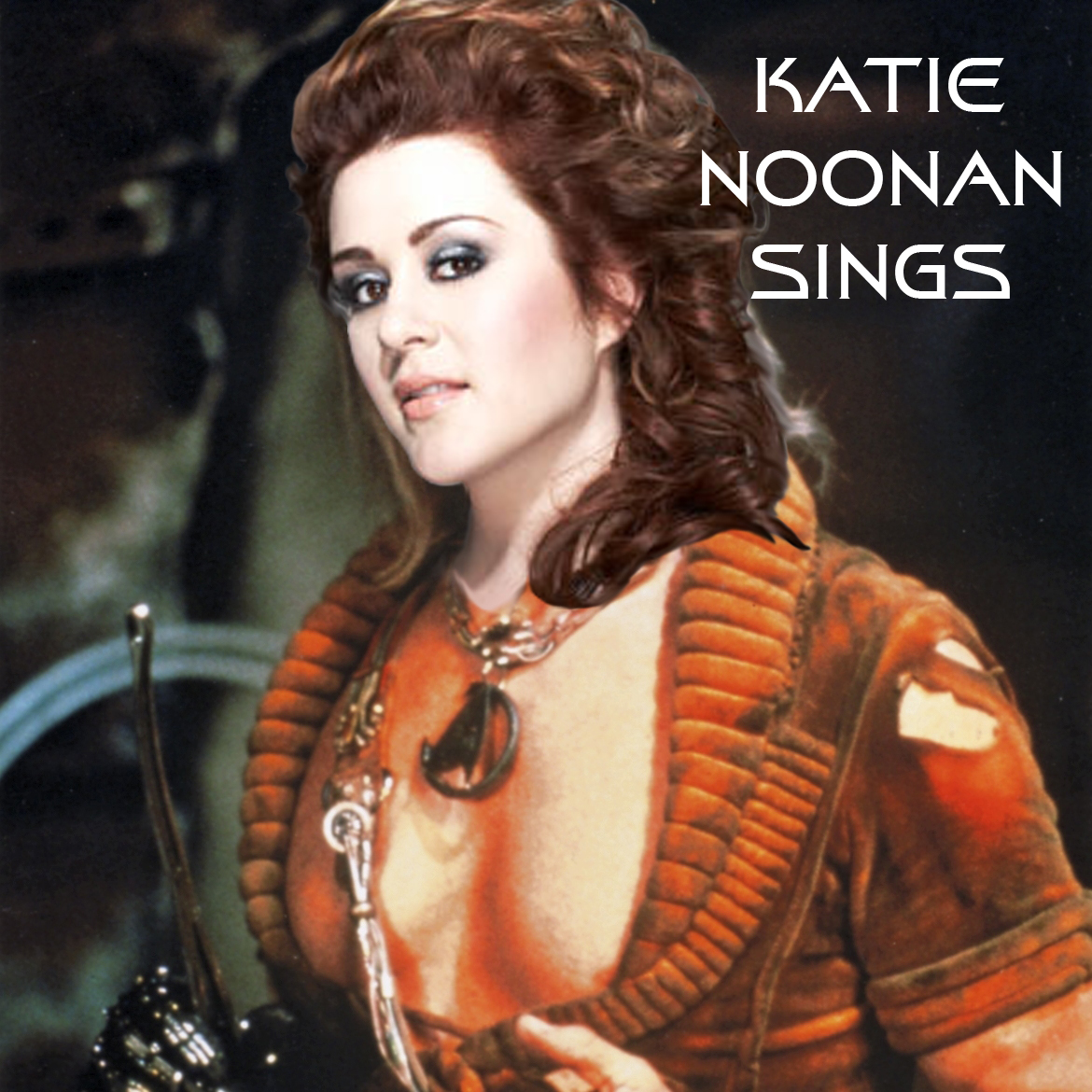
Songs included Space Seed Ripening, Ear We Go Again and Boogie Alpha V. The bonus track was a spoken-word version of the Australian traditional Botany Bay.

Songs included Space Seed Ripening, Ear We Go Again and Boogie Alpha V. The bonus track was a spoken-word version of the Australian traditional Botany Bay.
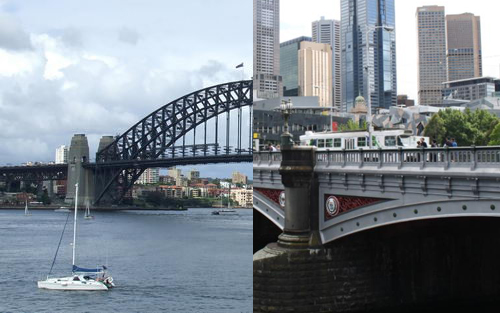
As a totally clichéd Melbourne coffee snob, I got pretty pissed off when Oprah Winfrey’s visit to Australia in 2010 featured the pronouncement that when hip Australians want to meet up for coffee, they pop down to McDonald’s.
This proclamation was made in Sydney. Had she said it in Melbourne, she’d have been met with a pretty violent round of scoffing and under-the-breath muttering as we tightened our black free-trade scarves and resumed reading our Nietzsche biography. Ah, Melbourne. The city that, according to a study from a few years ago that I vaguely remember but can’t be bothered researching for verification, was found to be the best place to get a coffee outside of Italy. (Thanks, in no small part, to our large Italian population. Grazie, guys!)
If there’s one thing we in Melbourne do, much to the eternal chagrin of the rest of the country thanks to the unerring sense of superiority with which we do it, it’s proper coffee. No McDonald’s drinkers are we.
This was one of the things that was going through my head as I drove away from my beloved Melbourne this Saturday past, recalling futile attempts during previous Sydney trips to find a good coffee in what will, for the next six months, be my home town. The trek I’d taken with two friends to find a decent café in Sydney’s CBD the year previous was now taught in schools alongside the Burke and Wills expedition for students who thought the Burke and Wills story ‘wasn’t depressing enough’.
If you saw my pre-trip post the other day, you’ll know I comically predicted my car would break down at the Victoria-New South Wales border. If only I’d made it that far. No, after my car repeatedly stalled, shut down, then started back up again, I realised I was in trouble.
I pulled off the Highway and into the town of Wangaratta. For those of you who don’t know much about Wangaratta, I am one of you, so don’t expect any illumination here. I drove down the main strip, searching for a mechanics. I spotted a car dealership, and began weighing the impracticalities of buying a new car and ditching the one I was in against joy I would experience as I dined out on the story for years to come.
Finding the only open-on-a-Saturday mechanic, I pulled in and explained the problem. My battery had run flat weeks earlier, and despite being advised to replace it outright, I’d chosen to charge it right back up again, which was clearly the stupid thing to do. ‘So yeah,’ I said, ‘I think it must be the battery.’ ‘Doesn’t sound like the battery,’ he said. ‘Oh. Are you sure?’ ‘Don’t know,’ he said, ‘I’ll take a look.’ ‘Check the battery first,’ I suggested.
It was going to be half an hour until he could take a look at it, so he suggested I wander around. ‘Not much to see around here, though,’ he said ruefully. ‘If you feel like a coffee, you could always pop over to the McDonald’s.’
I looked in the direction he’d nodded in, and saw the unmistakable monolith in the centre of the strip, surrounded by buildings that were steadfastly refusing to be Other Cafés.
‘Maybe,’ I said through gritted teeth. I was actually quite desperate for a coffee, and as the other local attractions – a K-Mart, a bridge, some grass – were closed, I steeled myself against my own instincts and headed towards it.
I took a seat from which I could see my car, and ordered the thing on the café menu that looked like it would come closest to tasting like coffee. I sent a few mournful texts, checked Twitter, and was eventually served with a beverage the colour of a Dickensian city planner’s favourite swatch.
I won’t dwell on the coffee, other than to say that it was neither as bad I was expecting, nor as good as their ads would have me believe. It was hot, it was caffeine, and it had been four hours since my last one.
Work hadn’t begun on my car, so I trekked around to look at the sites. Other fast food restaurants. Traffic lights. Some bitumen. A real estate agency. That might be good. I browsed the window, trying to ascertain what property prices were like in Wangaratta so I would have a better frame of reference for the shock I was apparently supposed to display whenever someone told me how much the house across the road from theirs went for.
The door opened, and the realtor instantly spotted me gazing with more interest than I’d intended at the ads. ‘Can I help you with anything?’ he asked. ‘My car broke down,’ I explained. ‘If they can’t fix it, I was thinking I might have to settle down.’ He laughed the laugh of someone who hadn’t really followed any of that, and I wandered away.
When I returned to the mechanic, he was peering into engine. ‘How is it?’ I asked. ‘The battery is fine,’ he said, and I silently applauded my own battery-charging skills. This was, after all, my most significant mechanical achievement since extracting an old Meccano piece from my foot twenty-three years previous.
The actual problem was twofold. Fold one: the carburettor was playing up and not letting enough petrol get through to the engine when I was running it at high speeds. Fold two: he was unable to fix it himself.
‘Is there any chance I’m getting to Sydney today?’ I asked. ‘Maybe. You can’t go above 70kmph, though, or the thing will stall again.’ ‘Then I’d better get going.’
I set off once again, and the stupidity of my decision to drive the whole way slowly dawned. Why had I thought this was a good idea? I should have flown! Who needs a car in Sydney? Had I seriously being considering buying a car and a house in Wangaratta? As I ambled along at an excruciating 70kmph, I realised that, at the rate I was going, it would be about 10:30pm before I got into Sydney. If I made it there at all.
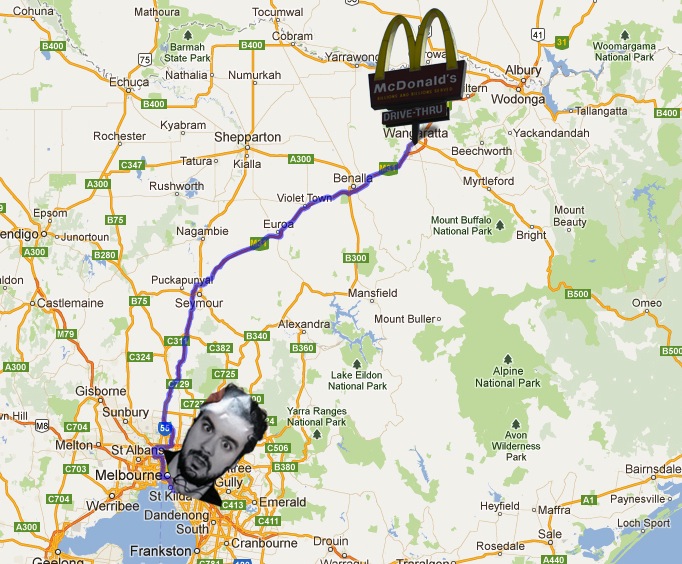
After calling up my partner Kate and talking the situation over with her, we both decided that the best course of risk mitigation was for me to turn around and come home and then catch a flight up. After all, I was 252km from Melbourne and 624km from Sydney. It was simple, frustrating maths.
As I ambled back at a leisurely 70kmph, waving to all the cheerful motorists who were happily passing me at the 110kmph that the Hume Highway permitted, nay, insisted upon, I considered what my day had been aid of. My only plan for Saturday had been ‘get to Sydney’, and having wasted half the day, I was now driving in the opposite direction of it. I needed to find a point to it all.
Halfway back, I stopped on the Highway to save what turned out to be a blind rabbit that had wandered into the path of traffic. After ushering him back into the brush, I wondered if maybe this was a Quantum Leap situation, and Sam Beckett had leaped into my body to save the rabbit’s life because it would one day write Yellow Submarine and assassinate Robert Kennedy.
Even with my reasoning, that was a stretch.
There was no avoiding it. I’d driven the 262km from my front door to Wangaratta for one thing and one thing only: a coffee. From McDonald’s. The furthest I had ever travelled for a single beverage.
They had won.
Nevertheless, I eventually made it home, repacked my things, and, thanks to the combined efforts of Kate, my brother Ben and my friend Kirk (who greeted me at Sydney airport) , I made it my final destination. At 10:30pm.
And hey, it wasn’t all bad. The eventual flight was pretty great: I got an emergency exit row with excessive leg room, nobody was sitting next to me, and everyone in the vicinity was quiet enough for me to concentrate on my book. And the first coffee I had since arriving in Sydney was both damned good and not from any fast food restaurant, so I call that – when all is said and done – a win.
To Wangaratta and Back Again – Lee’s Podcast Playlist (in order): On the Media (25/5/2012), The Science Show (26/5/2012), Radiolab (21/5/2012), Boxcutters (#307), This American Life (#465), Download This Show (25/5/2012 and 1/6/2012), The Writer’s Almanac (30/5/2012 – 1/6/2012), Onion Radio News (22/5/2012 – 1/6/2012), Desert Island Discs (Spike Milligan, 1978 and Arthur C Clarke, 1977).
Did you ever have that thing where you get some big news, but don’t have time to tell anyone? And that big news involves you moving to another city for six months in a week-and-a-half from the point at which you found out about it, so you spend all of your time tying up loose ends and getting ready, and still half of your family and friends don’t know?
I’m not actually asking you. That’s a pretty specific set of circumstances, and I’m only framing it as a rhetorical in order to segue gracefully into my own news. If such a thing has happened to you and you feel compelled to tell me about it, you may, if so compelled, post a comment below.
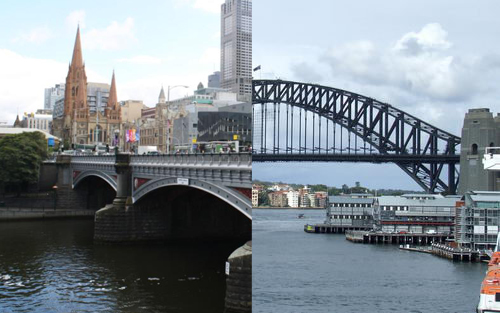
This coming Saturday I shall get into my car and drive from Melbourne to Sydney. Or, more accurately, drive from Melbourne to the NSW border, at which point my car will probably conk out on me.
Why am I going to Sydney? Well, I’m not actually 100% sure that I’m allowed to make the news public yet or not. (It’s not Bazura.) So I will play it safe and tell you simply that I’ve been offered a very cool gig that requires me to work in Sydney’s ABC building. (No, really, it’s not Bazura.) I’ll drip-feed you more info later, but for now I’ll just tell you that I’ll be working on a very popular and successful television program. (Told you it wasn’t Bazura.)
Apologies to all the people close to me who are finding out about this now on this blog. It’s very impersonal and distancing and an indictment on our current culture of blah blah blah, but I literally found out this time last week. I’ll be popping down every month to see if family, friends, my place, my stuff, and my fiancée are all still fine, and I’ll be back permanently around the end of November.
To people I don’t know but who read this anyway, well, you’re not going to be affected much at all. I’m told they have computers in Sydney, so this blog and my Twitter feed should continue to function without too much interference. Oh, except for the new job I have. Employment does tend to get in the way, doesn’t it?
See you all very, very soon… particularly those of you in the greater Sydney area with comfortable couches.
About a year-and-a-half ago, my Bazura Project co-person Shannon Marinko made a pilot for Channel Ten. The show was called Rant, and it was basically Shannon yelling at the audience about things that annoyed him. Like Media Watch if it was shoutier.
Shannon invited me to come on board and do something for it, which I did. Comedian and filmmaker Dan Ilic directed, and he brought in Tegan Higginbotham for a segment. (Tegan impressed us so, we invited her back to appear in The Bazura Project’s ABC2 incarnation.)
Whilst I’m not especially happy with my own contribution (a couple of my line deliveries grate with me intensely), I do dig everyone else’s work a lot. And now it’s been put online, you can enjoy it in all its ranty glory.
ABC picking up The Bazura Project immediately after the pilot was shot meant Rant was put on ice, but my fingers are crossed that it get made at some point in the future. After all, there’s so much pop culture, and so few people yelling at it.
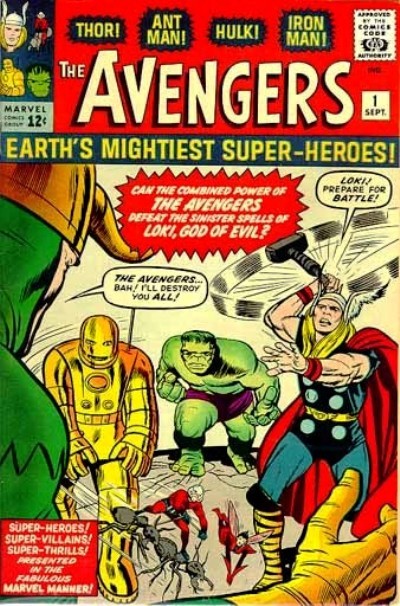 It’s only a few short weeks until The Avengers (2012) is released, and you can smell the excitement. In many comic book stores the world over, that smell is potent enough to bring tears to the eyes.
After years of building worlds, carefully establishing characters, and frequently re-casting said characters, Marvel Studios is only moments away from bringing us a film so big, it’s poised to become the Dark Knight of comic book movies. It’s an enormous, unifying franchise that the world has never seen the likes of before.
Or is it?
Fans have notoriously short memories, and in all the excitement, nobody stopped to look back at all the Avengers movies that have come before. After all, fans have notoriously short memories.
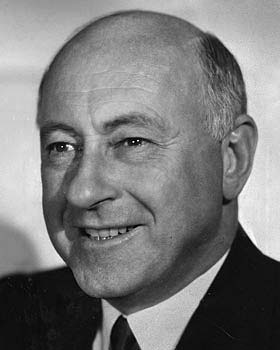
Cecil B De Mille
It was 1927 when legendary filmmaker and close-up enthusiast Cecil B. DeMille was wrapping up work on The King of Kings, his larger-than-life story about the final years of Jesus Christ. DeMille had been on a steady incline of epic stories, growing increasingly passionate about larger-than-life heroes. He’d conquered Moses and the Old Testament in his 1923 film The Ten Commandments and now Jesus and the New Testament in The King of Kings.
With no further testaments due for publication, DeMille began looking to the modern day fables. Superheroes were already being heralded by literary critics and debt-ridden comic book writers as the true 20th Century myths, and DeMille saw the potential they held. He immediately employed the services of Hollywood newcomers Herman J Mankiewicz and Ben Hecht, and set them to work on the script.
The first question was over which superhero should be the first to appear on the big screen (then known as “the screen”). They considered eighteen year old Douglas Fairbanks Jnr as The Spider-Man, and even did some make-up tests with Al Jolson as The Black Panther. But these characters didn’t interest DeMille. He felt their humble stories could not, by themselves, compete with the tales of Moses, Jesus, or even the recently-retconned John of Patmos. It was then that he had his boldest idea: multiple superheroes in a single movie.
The script for The Avengers (1928) was soon finished, and DeMille, taking advantage of the new synchronised sound system, began casting with stars he was confident would smoothly navigate the transition from silent films. Douglas Fairbanks Snr, who had already played such icons as Robin Hood, Zorro, and d’Artagnan was cast as the frozen, Kaiser Wilhelm-punching World War One hero Captain America.
Unable to imagine anyone but the late Rudolph Valentino in the role, DeMille insisted that The Iron Man be written out, essentially giving his storyline to Johnny Weissmuller’s Prince Namor, the Sub-Mariner. This was the first acting role for the Olympic gold medal swimmer, still four years away from his defining role as Tarzan, and sixty-six years away from a fatal pulmonary edema.
Lon Chaney Snr, whose transformations in 1925’s The Phantom of the Opera and 1927’s London After Midnight were already the stuff of legend, was immediately cast as The Incredible Hulk. His on-screen transformation was terrifying, so much so that they had to be toned down in editing to be palatable for family audiences. The Black Knight was quickly rewritten as The Black Cowboy once Will Rogers expressed an interest, and Greta Garbo came on board as the sultry superheroine The Wasp, a superpowered debutante who “just wants to be alone”.
DeMille’s religious sensibilities informed the focus of the film, which skewed towards the godlike powers of Thor. The idea of two warring demigod brothers was too tempting to ignore. Playing up their well-documented feud from a few years earlier, DeMille cast John Barrymore as Thor and his real-life brother Lionel Barrymore as Loki.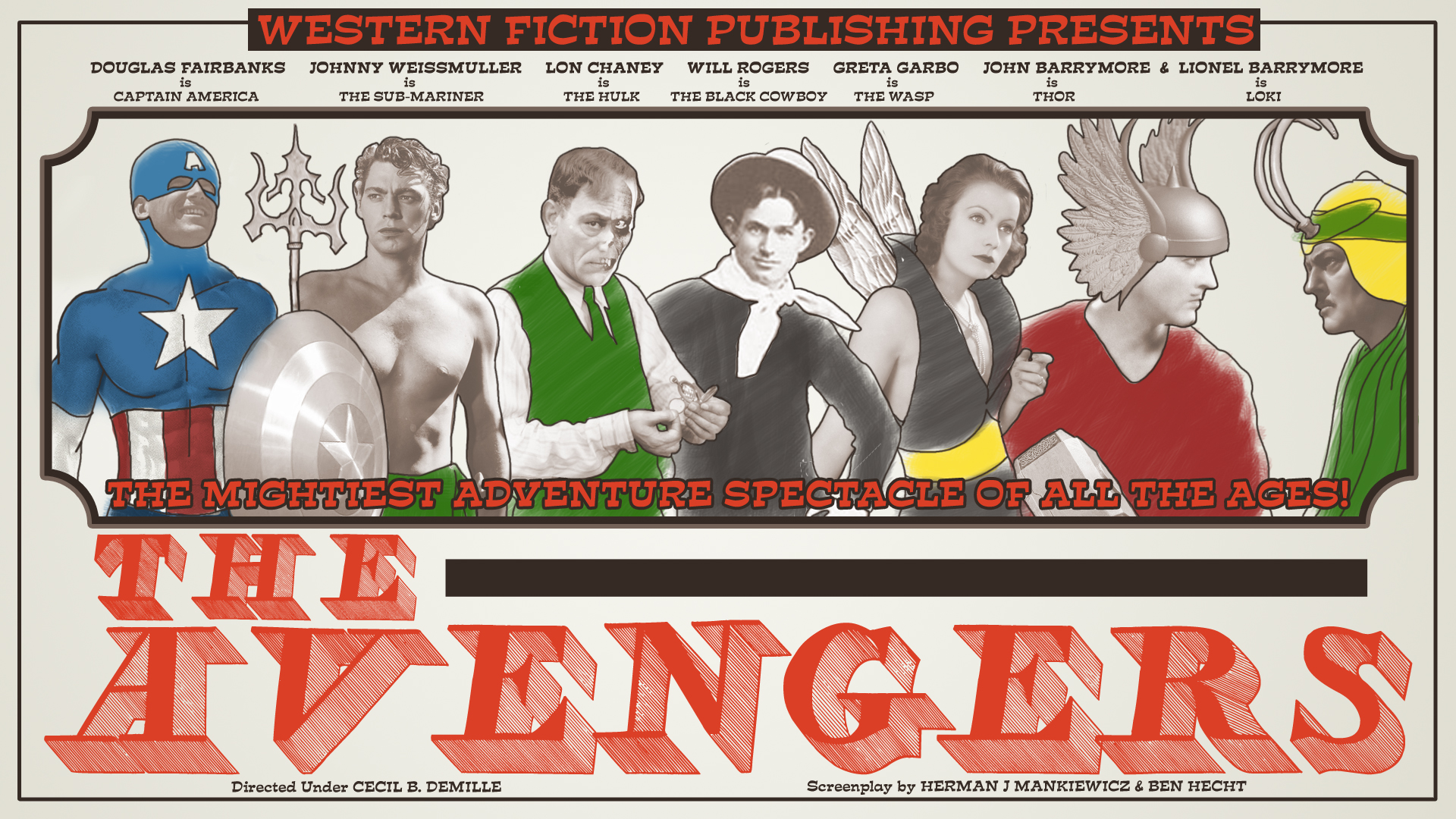
The film was a raging success with audiences eager to take their minds off the upcoming Great Depression, and planning immediately began on a sequel. But before a script could even be commissioned, circumstance led to disaster.
John Barrymore collapsed in 1929 during his honeymoon, and his career soon declined. Douglas Fairbanks was unable to perform action scenes any longer due to his years of chain-smoking, and was growing frustrated by the perceived restrictions that the talkies has introduced. Lon Chaney Snr contracted pneumonia and died. Johnny Weissmuller was signed by MGM to play Tarzan, and could not return. Will Rogers used his popularity of his Black Cowboy character to mount what was assumed to be a fake run for the Presidency, but turned out to be completely genuine halfway through his second term. Garbo attempted to mount a spin-off movie featuring only The Wasp, telling the studio that she “really did want to be alone”. But momentum inevitably waned, and the whole project was shelved.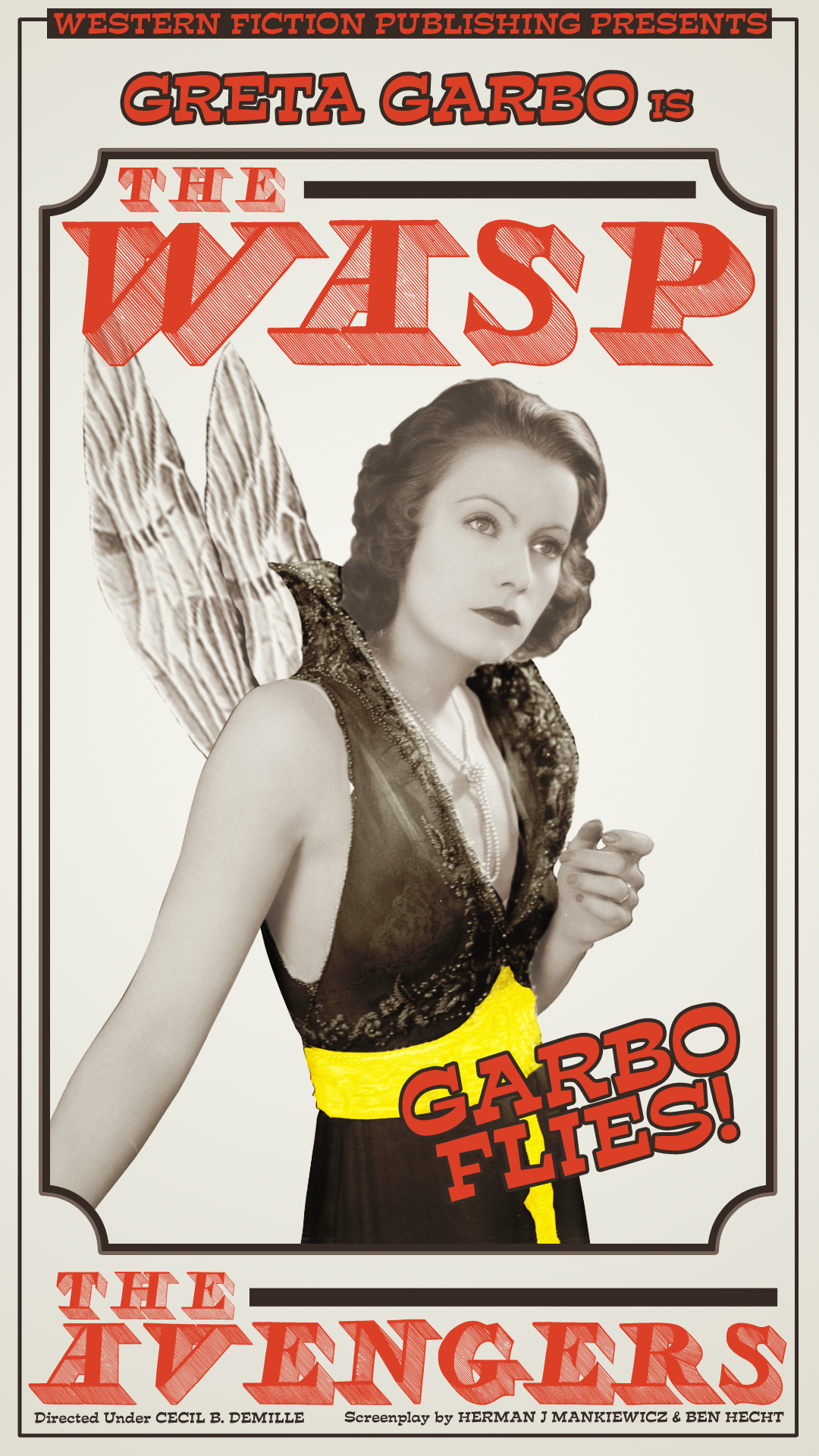
Though Douglas Fairbanks had grown sick of movie acting, he often spoke fondly of The Avengers to his close friend and United Artists co-founder, Charles Chaplin. Chaplin immediately saw the comic potential in the idea, and began crafting his own take on the story.
Chaplin gave himself the role of Wolverine, tempted by the comic potential offered by a man who can never be hurt, regardless of his lack of coordination and constant mishaps. He mined the opportunities suggested by the adamantium claws emerging at the most inconvenient times.
He offered the role of Spider-man to Buster Keaton, whose career was on the rails following Keaton’s self-described “disastrous” contract with MGM. Keaton’s natural physical dexterity made him perfect for the role of the acrobatic Peter Parker. (The classic scene in which Chaplin’s Wolverine and Keaton’s Spider-man both try to stop a runaway locomotive, unaware of one another’s efforts, was heralded as the most hilarious use of Wolverine until the bathroom scene in 2009’s X-Men Origins: Wolverine.)
Another struggling comedian, Harold Lloyd, was also offered a part. Unlike Chaplin and Keaton’s personas, Lloyd’s characters exuded an unwavering optimism, and he took the role of the boyishly-hopeful Captain America. Aware that physical comedy would not be enough to sustain a feature-length talkie alone, Chaplin brought in Groucho Marx to play the wise-cracking Nick Fury replete with greasepaint eyepatch, and WC Fields as the grumpy drunken demi-god Thor. Edgar Kennedy played the hot-headed villain Count Nefaria, whose plans were constantly and unwittingly foiled by the inept team.
With Fatty Arbuckle unable to play the Hulk due to an unfortunate combination of scandal, alcoholism and death, Chaplin cast Stan Laurel as the bumbling Bruce Banner and Oliver Hardy as the monster he repeatedly transformed into.
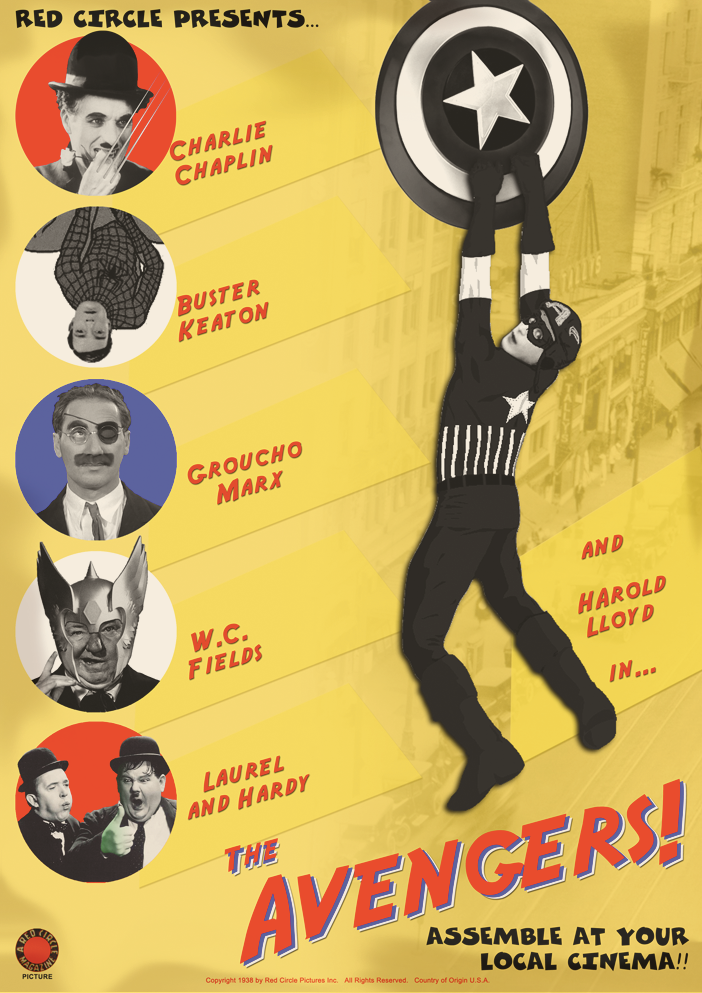
The Avengers (1938) was a modest success, but did little to influence the careers of its stars. Keaton and Lloyd continued to struggle, and Groucho returned to making films with his brothers. Only Chaplin appeared to be changed by the experience: finally embracing the possibilities that sound offered, he then went on to make The Great Dictator in 1940, resisting Lloyd’s suggestion that Captain America should be the one to defeat Adenoid Hynkel.
Audiences seemed happy enough with the film, but obsessive comics fans were outraged. Message boards were filled with angry comments from enthusiasts who felt their heroes were not being treated seriously. Many of the commenters trekked for miles to post to their nearest message board, often devoting days to the journey.
The reaction of this vocal yet statistically-insignificant minority was taken seriously by Hollywood. It was acknowledged that a sense of adventure and derring-do had to be returned to the franchise, and so a script was eventually commissioned from Billy Wilder and Raymond Chandler, fresh from their huge success with Double Indemnity the year before. Michael Curtiz, whose 1938 film The Adventures of Robin Hood was considered one of the greatest adventure films ever made, was hired to direct.
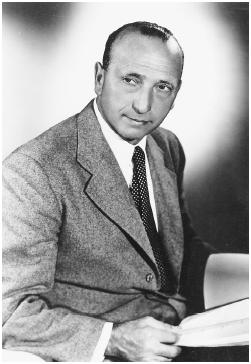
Michael Curtiz
It was unusual during that time for more than one or two movie stars to appear in a single film, but Curtiz recognised that for the audience to believe that the world’s greatest adventurers were all gathering to combat a huge evil, so too would the world’s greatest stars have to be assembled. With stars contracted to different studios, the negotiations were long and protracted, but eventually Curtiz locked in the cast he wanted.
Marking the character’s second appearance on-screen, Nick Fury was portrayed by Clark Gable. Gable was so successful in the role, the eye patch became a desired fashion accessory following the film’s release, with many fans needlessly blinded. Having recently played the millionaire CK Dexter Haven, Cary Grant was cast as millionaire Tony Stark, as well as alter-ego Iron Man. Gregory Peck played Captain America as the weary returning World War Two hero, whose yearning for peace is the emotional underpinning of the film. Gary Cooper’s Thor was even-tempered, considered and zen-like, turning the firey Norse god into something of a Christ-like figure.
Curtiz considered the idea of an Incredible Hulk to be too silly for his adventure film, also dismissing short-lived spin-off character Silly Hulk as too incredulous. Despite meeting with Orson Welles for the part, he eventually excised the Hulk from the script. The Act One chaos created from the Hulk’s rampage was given to Wolverine (not present in early drafts of the script), as played by James Cagney. The elements of the screenplay that had dealt with Bruce Banner’s struggle with his powers were woven into Spider-man’s arc. Playing up Peter Parker’s roving reporter angle, Curtiz convinced the perennially reporter-esque James Stewart to take the role.
With Claude Rains as Doctor Doom and Peter Lorre as Mephisto (two villains who team up to destroy the Earth), as well as various uncredited sequel-teasing cameos dropped into the climactic battle in the film’s final moments – Errol Flynn as Hawkeye; Joseph Cotton as Starfox; Henry Fonda as Hercules – the film earned its nickname “The Biggest Film of All Time!” and its release date “Late July!”.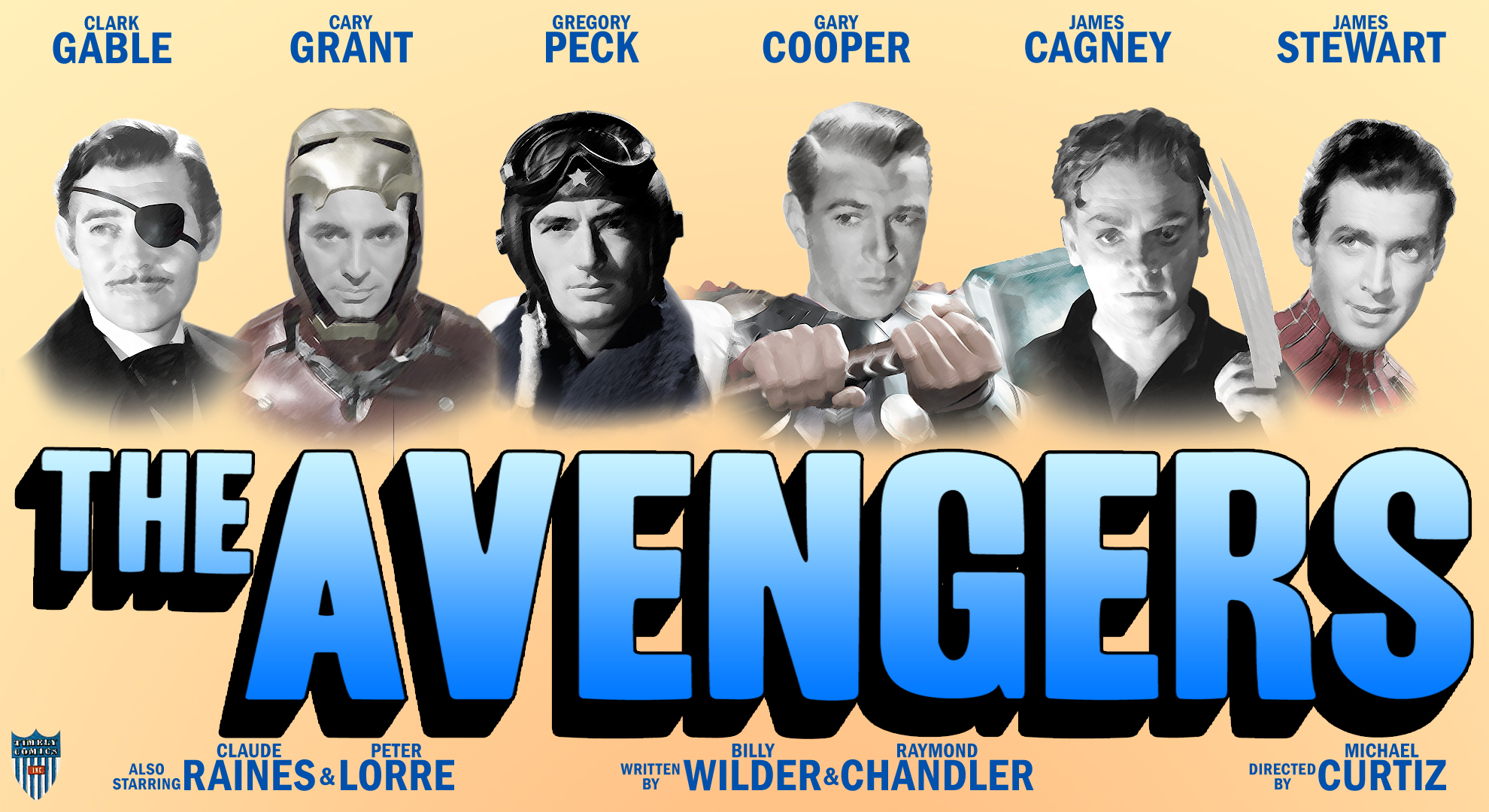
Despite its huge box office take, Academy Award nominations, and praise for its impressive use of CGI (Cary Grant Imagery), The Avengers (1946) barely broke even. With so much money poured into not just the film’s production but also huge star paycheques, the studio declined to move forward with a sequel.
The property, however, remained massively popular, and the aim was to reduce the cost of either the production or the stars. Considered options included: (a) big movie stars arguing in a room for ninety minutes; or (b) massive explosive set pieces featuring no characters whatsoever. (The first option would eventually transform into Twelve Angry Men, and the second into every action film from 1983 onwards.)
After the studio briefly considered resurrecting the 1930s cast for either Abbott and Costello Meets The Avengers or the Hope & Crosby vehicle Road To Avengeance, they soon realised the landscape had changed. World War Two was fading into memory, and popular culture had taken on a much more positive outlook.
And then someone decided The Avengers should be a musical.
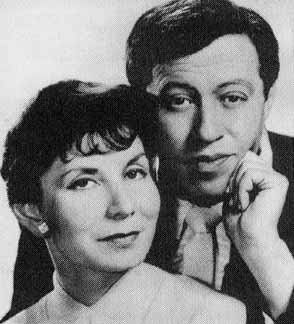
Betty Comden and Adolph Green
Adolph Green and Betty Comden were brought on to pen the film as a bright, Technicolour song-and-dance show. Producer Arthur Freed recruited the new golden child of musicals Stanely Donen to direct, and began “congregating” the cast.
In keeping with the style of the era, the majority of the film did not employ any villain. Circumstance itself was the antagonist: The Avengers, on shore leave after saving the Earth from destruction, desire twenty-four hours of normalcy and must try to hide their heroic identities from an adoring public.
Gene Kelly, initially offered the role of Iron Man, instead opted to play Nick Fury, who must pretend to be blind in both eyes so as not to show off his iconic eye patch. Bing Crosby was chosen by Kelly and Donen to play Iron Man, making him the second actor to play both CK Dexter Haven and Tony Stark.
Howard Keel, recently released from his contract with MGM and planning a return to the stage, was convinced by Donen to play the Mighty Thor, the booming God of Thunder, in a comparatively sedate performance.
Frank Sinatra was brought on to play Hawkeye, and it was on the set of the film that he met someone who would become very important to his future. Green and Comden had chosen to ignore the current comics continuity, and, like the preceding film, written Wolverine into a key part. A young, upcoming, hairy actor named Dean Martin was tapped to play the role.
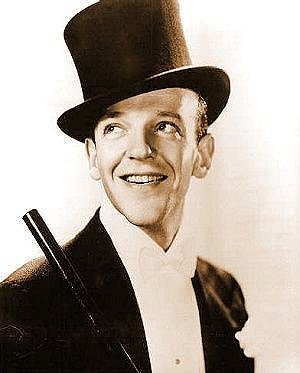
Fred Astaire
Although he had begun considering retirement, Fred Astaire was talked into playing Captain America. Astaire was in his late 50s, but acquitted himself well in the role, particularly in the scene where, after being unwittingly signed up to an amateur boxing tournament, he must hide his super-soldier abilities from the crowd. When he overhears the match promoter muttering “Can’t punch. Can’t block. Can feint a bit.”, Astaire’s Steve Rogers takes on his opponent, a dirty local fighter named George Maxon (Jules Munshin), in an impressive sequence revolving around a carefully-choreographed boxing match/tap dance routine. Although Astaire garnered a lot of praise for this scene, many critics noted that Munshin had to do exactly what Astaire did, only backwards and in boxing gloves.
The cast was rounded out by Donald O’Connor as Spider-man, and Danny Kaye as Bruce Banner. The Wolverine/Spider-man sequence from Chaplin’s film was essentially recreated using these two characters, only with a much cheaper collapsing building in place of the train, and a catchy musical number in place of what had appeared to be mouthed profanities.
Just as the superheroes all find their dream women during their one day of shore leave, they’re unexpectedly called back to fight an invading Skrull army. In the elaborate number My Heart Assembles For You, each of the characters speculates that the team would easily survive without them, and yearns to maintain their secret identity so they can remain with their newfound loves.
With none of the Avengers responding to the call, the invasion begins. Realising that their responsibility to the Earth comes first, the men reluctantly reveal their identities to the women… only to discover that they are also superheroes as well! Unsure of whether their teammates will accept a woman onto the team, each of the Avengers nervously returns to Time Square, accompanied respectively by Wasp (Cyd Charisse), Black Widow (Jean Simmons), Mockingbird (Kathryn Grayson), She-Hulk (Ann Miller), Tigra (Vera-Ellen), Mantis (Leslie Caron), Ms Marvel (Jane Powell) and Maria Hill (Rosemary Clooney).
Following an elaborate musical number in Times Square (It’s Our Golden Age), the film ends not with a battle, but with an Octuple Wedding presided over by Jarvis (Stubby Kaye), and they all move into the Avengers Mansion together.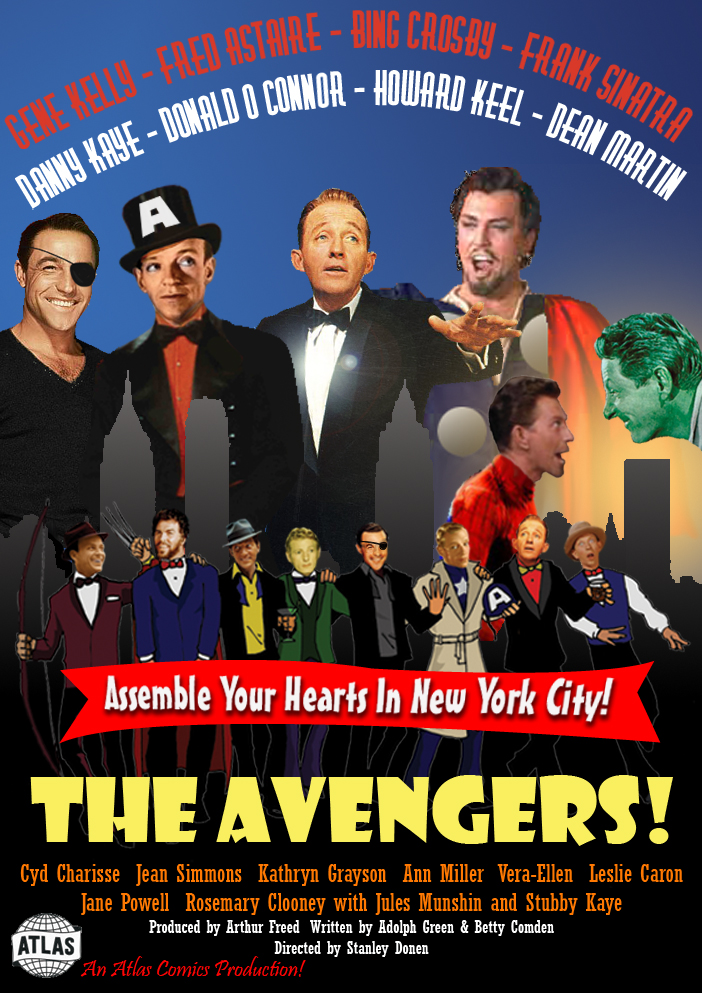
While many credited The Avengers! (1956) with helping to end the world’s love of the musical, it’s generally accepted that the proximity of the two events was merely circumstantial.
After the film’s release, Frank Sinatra – whose star was on the rise – wanted to remake the film as a Rat Pack follow-up to Ocean’s Eleven, beefing up roles for himself and Dean Martin, and filling out the rest with Sammy Davis Jnr, Peter Lawford, and Joey Bishop. The studio had other ideas, and commissioned a script from up-and-coming writer William Goldman. Franklin J Schaffner was hired to direct, and, after the critical backlash from comics fans claiming Hollywood was again not taking their characters seriously, returned to the adventurous spirit of the 1946 film.
Charlton Heston was signed as Nick Fury, with Steve McQueen as Captain America, and Paul Newman as Thor. Robert Redford played the antagonistic Prince Namor, and Warren Beatty, fresh from his breakthrough role in Bonnie and Clyde, played youthful, womanising millionaire Iron Man. After Rod Steiger was cast as The Hulk, Sidney Poitier came on board as the Black Panther. Trading on their chemistry from In the Heat of the Night, the pair played up the racial tensions in the script, with Poitier’s Panther forced to examine his own prejudices against gigantic green men.
Ultimately, the film didn’t know which tonal line to walk, with each actor seemingly in their own film. Newman and Redford ad-libbed witticisms, while Heston and McQueen constantly attempted to out-macho one another. Only Beatty and Burt Lancaster (Ant-Man) played up the high-stakes adventure, rescuing the third act showdown with Baron Zemo (Marlon Brando, pocketing two million dollars for fifty-three minutes of on-set work and setting a dangerous precedent). Few people knew it was Brando in the role, however, as he exercised the Quirky Behaviour clause in his contract and played the role entirely in a purple Burqua.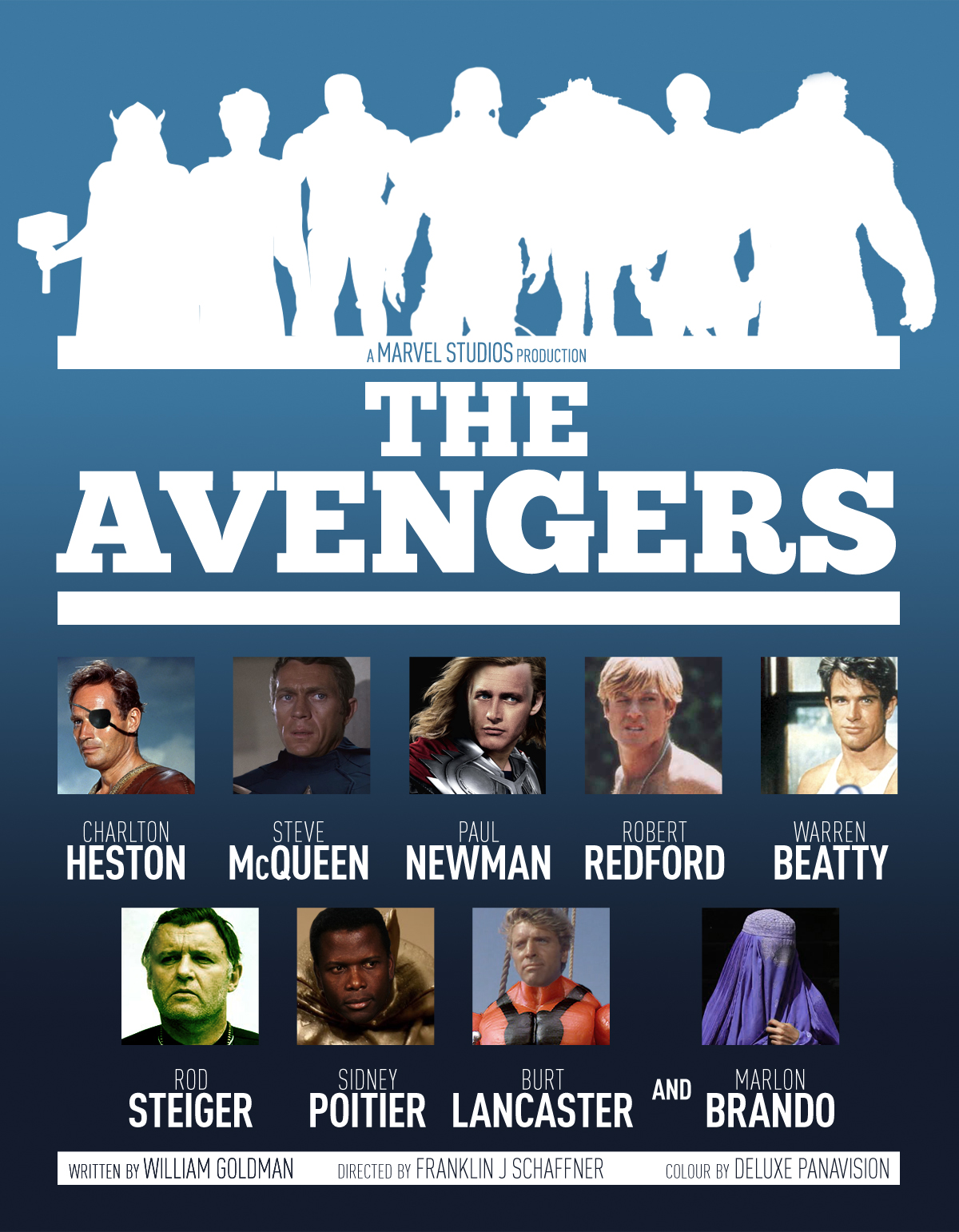
The Avengers (1969) was mostly well-received and remains staunchly defended by film fans of a certain age, but it was an undeniable narrative mess, and did little to give the genre credibility following the Donen musical.
Hollywood’s extravagance had become tiresome, and the New Hollywood movement was pushing back. Taxi Driver writer Paul Schrader had long been a fan of the films, having grown up on Curtiz’s version. He beat out Robert Towne for the job, pitching the film as an examination of the characters that inhabited these powerful bodies: why did they always do the right thing? What would happen if these powers were possessed by the unhinged? What happens when they fight amongst themselves? What if we don’t film it with a tripod?
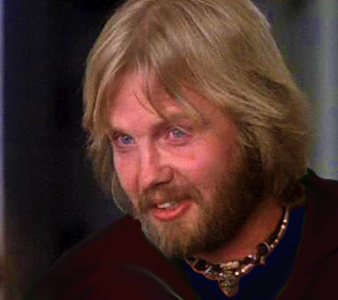
Jon Voight as Thor
Operating from Schrader’s script, director William Friedken opened the film with the violent death of Wonder Man (Dennis Hopper). The only witnesses are the Falcon (Fred Williamson) and Carol Danvers (Cybill Shepherd), both of whom soon end up dead in such a gruesome and explicit manner, they could only have been killed by someone with superhuman powers.
Nick Fury (Robert De Niro), who has been living a secluded life on the Helicarrier for the past ten years, returns to Earth to investigate the homicides. He clashes with Captain America (Jack Nicholson), who is suffering severe PTSD after the Avengers’ participation in the Kree/Skrull war, shown here in brutal and bloody flashback.
Captain America leads him to Hawkeye (Christopher Walken), hidden away in Little Saigon and making money by playing Russian Roulette with his bow and arrow.
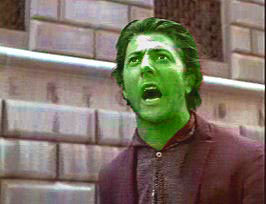
Dustin Hoffman, mid-transformation, as Bruce Banner
Fury is intimidated by Iron Man (Al Pacino) and beaten up by Wolverine (Harvey Keitel). After confiding his suspicions to Peter Parker (Bud Cort), Fury sees them printed in the next day’s Daily Bugle, and is immediately sued by Matt Murdoch (John Cazale). The film then sees Fury caught up in a fight between Thor (Jon Voight) and the Hulk, who transforms back into Bruce Banner (Dustin Hoffman), and pleads pathetically for his life before being bludgeoned to death with Mjölnir.
A broken man, Nick Fury retreats to the wilderness, where a tender encounter with an elk shows him that the real murderer is mankind.
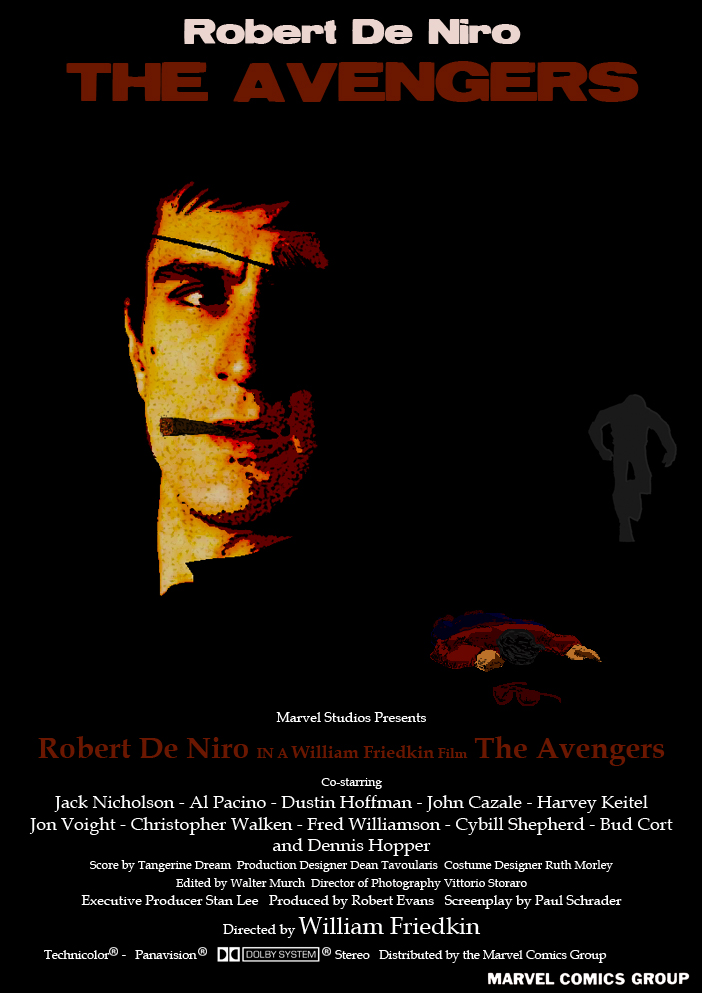
The Avengers (1979) was critically-acclaimed, but significantly less successful than the Incredible Hulk TV show, which had been commissioned at the same time. The studio realised that audiences, clearly unable to accept more than one actor as the Hulk, had made their choice.
The TV show ended in 1982, scuppering further TV plans. The success of the Superman movies had shown that people were eager for larger-than-life spectacle, and nobody did larger-than-life better – or at least louder – than the 1980s.
As with previous adaptations, the ’80s film ignored practically all of the established Marvel Comics continuity, eschewing the then-current Avengers line-up in favour of putting the most popular characters together in a room. Or, in this case, a humid South American jungle.
The testosterone-filled bloodbath gathered Arnold Schwarzenegger as Nick Fury, Sylvester Stallone as Wolverine, Dolph Lundgren as Thor, Bruce Willis as Captain America, Michael Douglas as Iron Man, and Jesse Ventura as the Hulk. Michael J Fox was briefly considered as Spider-man, but after being accidentally cropped out of the promotional group photo at the beginning of production, they decided to simply cut him out completely.
The remarkable superpowers of the characters took a back seat to the usual gun-firing and neck-snapping, and with the exception of the Tony Stark stock market subplot, it was blisteringly obvious that the film was just a repurposed military-men-on-a-mission script.
And yet, for all its testosterone, director John McTiernan was careful to film numerous key scenes with Bridget Nielson as She-Hulk. The production was praised by gender equality groups for featuring the first real female superhero since Garbo’s Wasp in 1927. Nielson was later cut out in editing.
After some awkward ADR turned Chuck Norris’s Kang the Conqueror into a Brazilian war lord attempting to traffic heroin into the United States, the film was released into theatres in the summer of 1988. Critically, it was a failure, but being the 1980s, nobody noticed, and The Avengers (1988) went on to enormous success.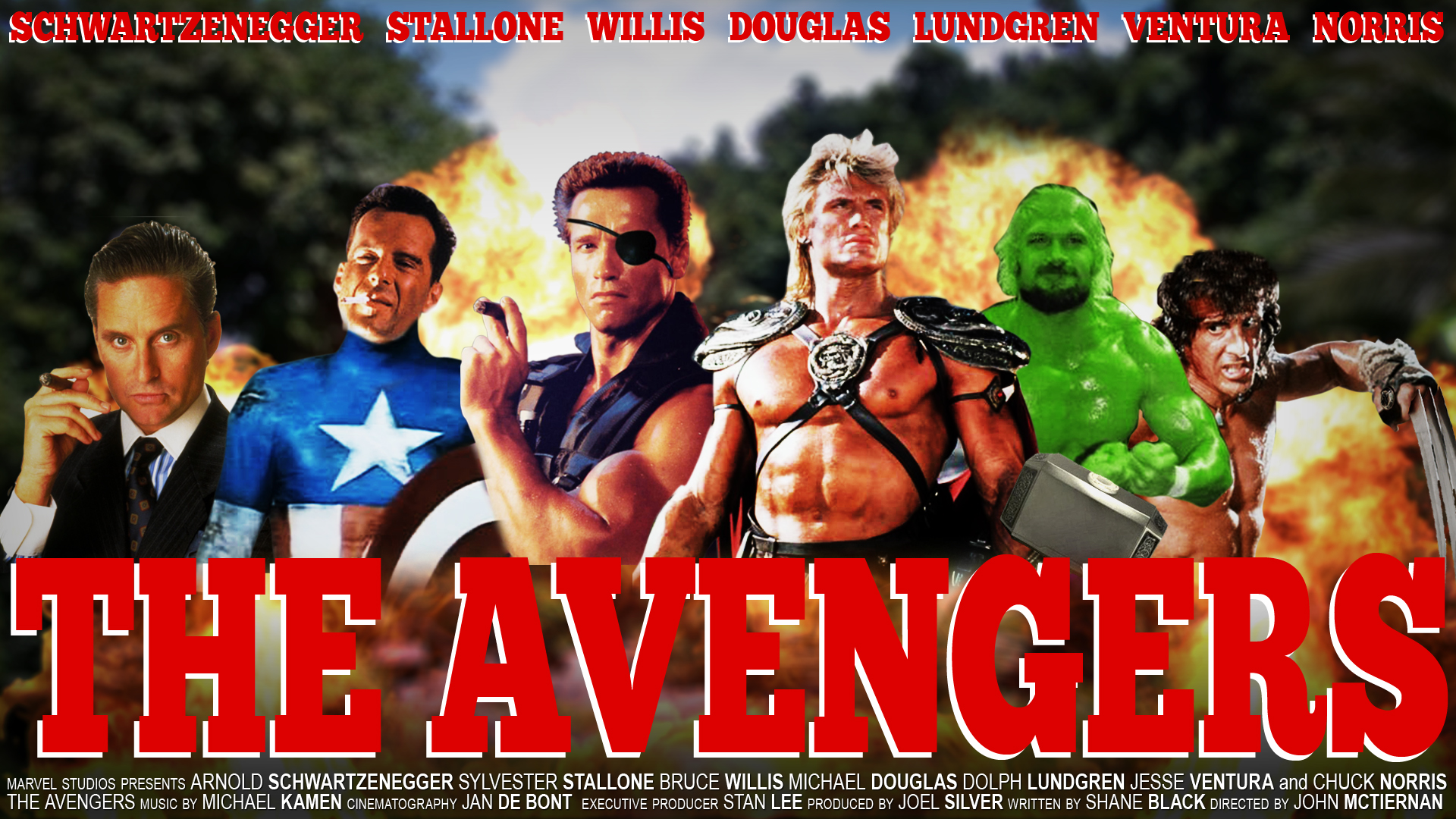
It was the last time the Avengers would see the big screen in the 20th century. In the 1990s, the makers of the Incredible Hulk TV show exercised a contractual clause that allowed them to make a sequel to their show under the Avengers banner. With Bill Bixby’s passing in 1993, the plot necessarily revolved around the Hulk (Lou Ferrigno) and his inability to transform back into Bruce Banner. Eric Allan Kramer returned as Thor (following his appearance in The Incredible Hulk Returns), as did Rex Smith as Daredevil (from The Trial of the Incredible Hulk).
Dolph Lundgren became the first actor to appear in more than one Avengers movie, albeit as a completely different character. He returned as the Punisher following 1989’s The Punisher, determined for a second shot at the character he felt could be even more stoic and uncompelling.
With X-Men in active development at Fox, the rights to Wolverine were tied up. However, the filmmakers successfully lobbied to return Nicholas Hammond (star of the 1970s show The Amazing Spider-Man). Matt Salinger reprised his role as Captain America, Angie Bowie played the Black Widow, and David Hasselhof continued the role he’d originated in that year’s Nick Fury: Agent of SHIELD. A brief and awkward cameo appearance from the cast of Roger Corman’s Fantastic Four resulted in the film being labelled an “unsalvagable disaster” by director Alan Smithee during early storyboarding.
The Avengers (1998), had little chance of success, particularly after inevitable and unfavourable comparisons with the Ralph Fiennes/Uma Thurman movie of the same year… the only time the Fiennes/Thurman movie would be positively compared to anything. The ’90s incarnation of The Avengers was relegated straight to video (enjoying an exclusive run on Betamax and Laserdisc), and was soon forgotten.
When the clocks finally ticked over to 2000, it seemed like the possibility of further Avengers films was dead. Comic book films were considered a joke, not because of the 1998 film – for no one saw it – but because of the undeniably silly Batman and Robin (1997), which had poisoned the film against not just comic book films, but all basic forms of happiness.
But then, the tide began to turn. The successes of X-Men (2000) and Spider-man (2002) showed that there was a future for these characters in quality films that the public would respond to. As the popularity of these films grew, so did Marvel’s ambition.
The mere concept that Marvel could build up a cohesive universe through individual films such as Iron Man (2008) and Captain America (2011), avoiding the usual action director clichés and going after people with a tonally-appropriate feel for the material, eventually culminating with a group Avengers film written and directed by genius cult favourite Joss Whedon… such a thing is the stuff of fanboyish ravings, the product of a mind with far, far too much spare time on its hands.
But, nevertheless, here we are. And when you line up in four weeks to see the 2012 iteration of The Avengers, take a moment to remember the remarkable series of events that led us here. For as Robert De Niro’s Nick Fury once said: “I get ya’s both in the Quinjet, I’ll give ya both a $&%@in’ beatin’, ya both can $&%@ each other.” Amen, Nick. Amen.
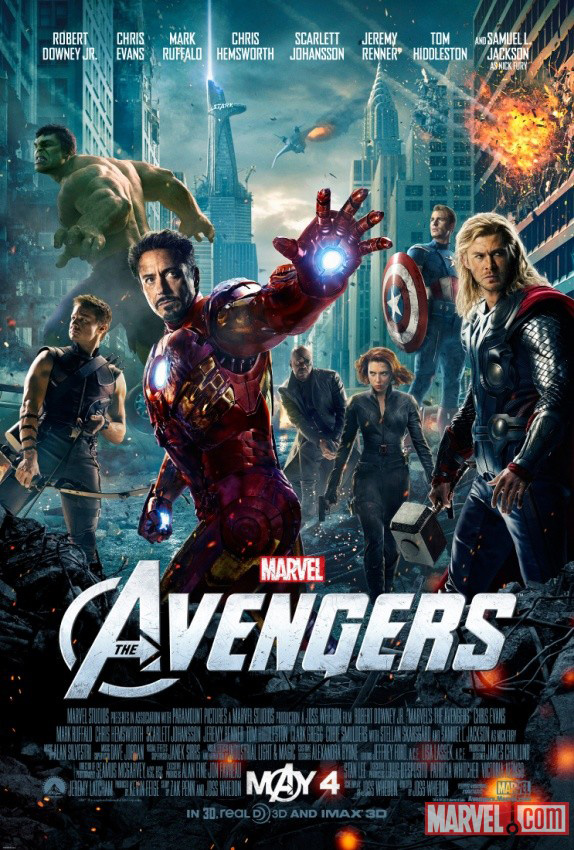 Credits: 1920s, 1940s, 1960s, 1980s and 1990s images by Jason Poley. 1930s, 1950s and 1970s images by Michael Bradshaw.